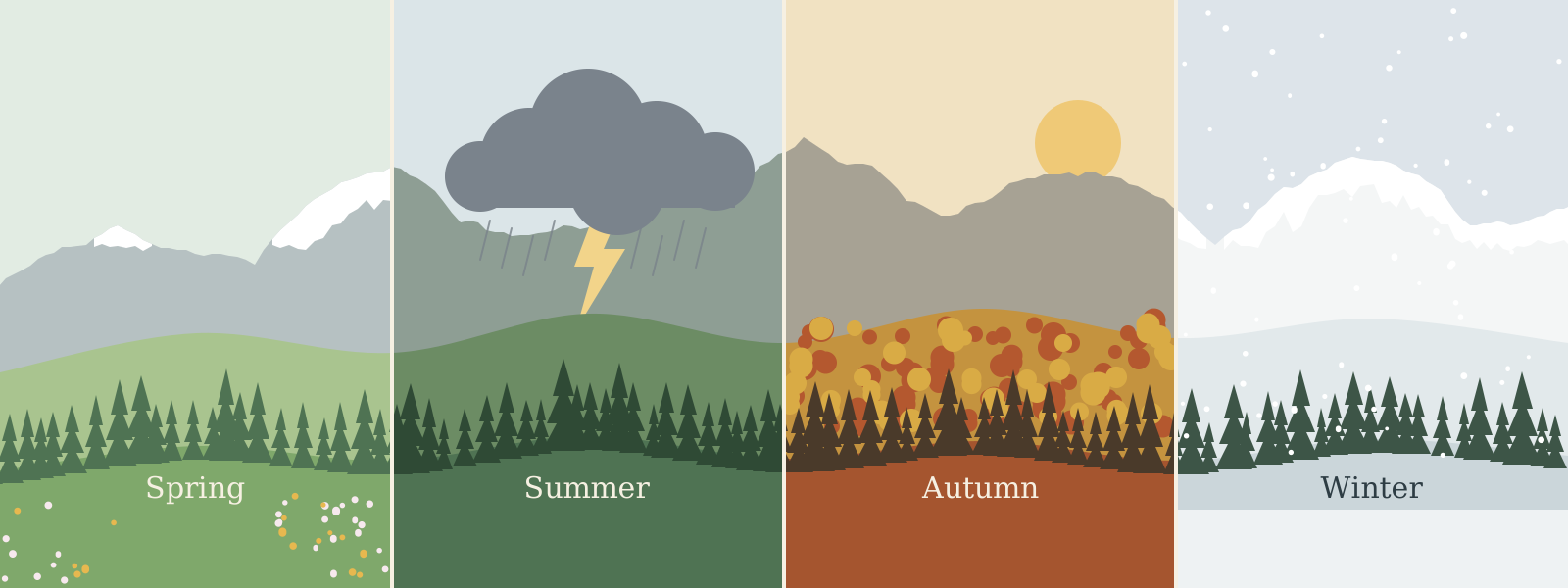
Illustration of the same mountain view in four panels: spring with snowy peaks and flowers, summer with a dark thunder cloud and lightning, autumn with copper and gold forests, and winter under deep snow.

Planning

When to go

The short answer is late summer and early autumn. The longer answer depends on what you want to do, and how you feel about snow, storms and closed roads.

Everything below comes from my own trips and from conversations with people who know these mountains far better than I do. The seasons shift from year to year, and the high mountains can still be deep in winter while the valleys below are in full spring. Treat this as a rough guide, not a calendar.

Spring

Roughly April to early June

Spring arrives in the valleys long before it reaches the ridges. The lower hills turn green and fill with flowers, the beech woods come into leaf and the villages are busy in the fields. Higher up, it is still winter in all but name.

  • Snow lies on the high ridges and plateaus well into late spring, and in shaded, north-facing gullies often into summer.
  • Avalanches are a real risk, especially in steep gullies and below cornices. Routes that are easy in summer can be dangerous now.
  • Mountain roads that cross the high ridges are closed.
  • Forest paths are often muddy, and streams run high with snowmelt.

Good for: lower forest walks, gorges and villages, and careful cable car trips up to the plateaus to look at the snow.

Summer

Roughly late June to August

Summer is the main season for the high mountains. By July most of the snow has gone from the paths, the huts are open, and long ridge walks become possible.

  • Afternoon thunderstorms are common, sometimes every day during an unsettled spell. They build quickly and are dangerous on exposed ridges. Start early and aim to be off the tops by early afternoon.
  • Weekends in July and August are busy around the cable cars, the popular huts and the famous roads. Go midweek if you can.
  • The valleys can be hot while the summits are cold and windy. Pack for both.
  • Old snow can linger in shaded gullies, and a summer cold front can still dust the ridges with fresh snow.

Good for: ridge walks, multi-day trips between huts, the glacial lakes, and the high roads once they open.

Autumn

Roughly September to October

Autumn is my favourite time. September often brings settled, clear weather with fewer storms than midsummer, cool nights and far fewer people. In October the beech forests turn copper and gold, and the valleys fill with mist in the mornings.

  • Days get shorter quickly. Plan for less daylight than you're used to from summer.
  • The first snow can reach the high ridges in September or October, sometimes for a day or two and sometimes to stay.
  • Some huts reduce their opening or close for the season. Check before you rely on one.
  • High roads close again once the snow comes, sometimes earlier than planned.

Good for: long day walks, forest colours, Maramureș and the villages, and quieter versions of the summer classics in early autumn.

Winter

Roughly November to March

Winter in the Carpathians is real winter. The high mountains are deep in snow, the days are short, and the weather on the ridges can be severe, with strong winds, low cloud and very low temperatures.

  • Winter walking in the high mountains needs experience and proper equipment, such as crampons, an ice axe and avalanche gear, and the training to use them.
  • Avalanche danger is a serious concern. Read the current avalanche bulletin and ask local mountain rescue before you go.
  • High mountain roads are closed, and smaller roads can be blocked by snow.
  • The valleys and lower hills can be beautiful in winter, especially after fresh snow.

Good for: experienced winter mountaineers, snowshoe walks in the lower forests, and quiet villages around the holidays.

At a glance

A very rough summary. Every year is different, so check the details for the place and week you have in mind.

SeasonHills and villagesHigh ridgesHigh roads
SpringGood, often muddySnow and avalanche riskClosed
SummerGood, can be hotBest, but watch for stormsUsually open
AutumnExcellentGood until the first snowOpen until the snow comes
WinterQuiet, often lovelyExperienced onlyClosed

All year round

  • Bears. Brown bears live throughout these mountains and are most active from spring to late autumn. Keep food packed away, make some noise in thick forest, and never approach or feed them.
  • Sheepdogs. In summer, flocks graze the high pastures with large guard dogs. Walk calmly around the flock, don't run, and keep your distance.
  • Forecasts. Look for a mountain forecast rather than the forecast for the nearest town, and expect the weather to be worse higher up than it looks from below.
  • Daylight. Whatever the season, leave enough time to get down before dark.